
Simran, 22
📍 Kolkata
What interests you?
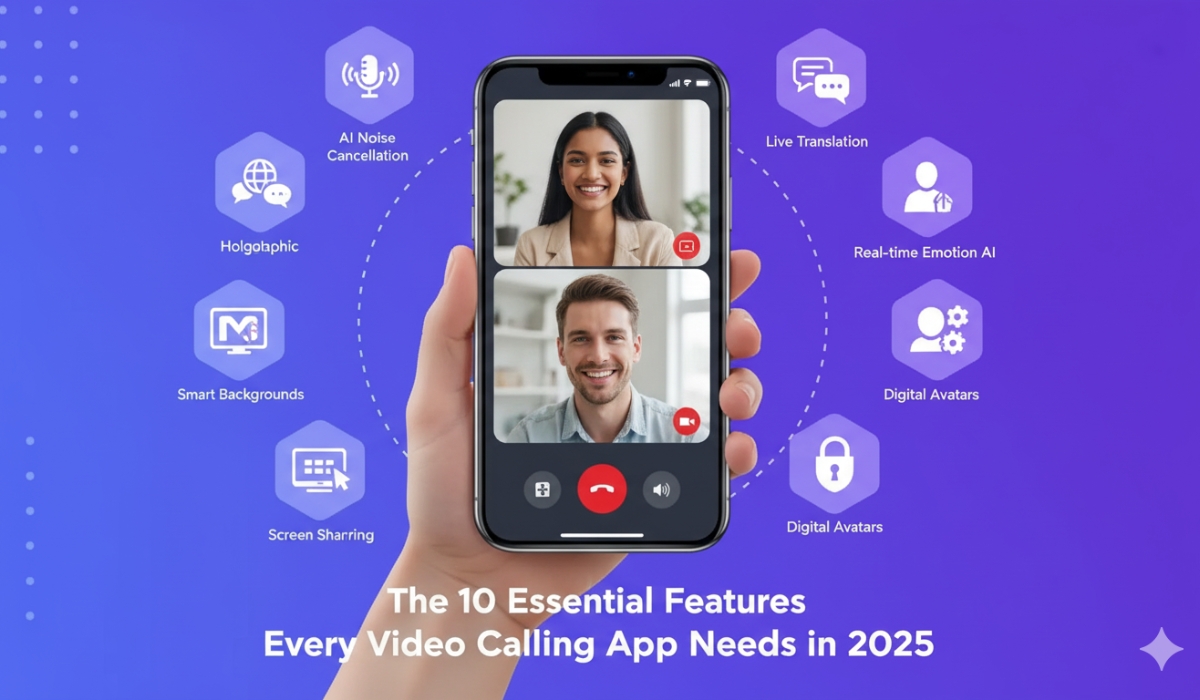
Video calling has gone from a convenience to a necessity. Whether it’s remote work, online therapy, long-distance relationships, or daily team check-ins, we’re living on camera. And in 2025, people expect more than just decent resolution and a stable connection—they expect video calling apps to be smart, secure, and seamless.
If you’re building, using, or choosing a video calling app, here are the top 10 must-have features that separate the best from the rest.
1. AI-Powered Noise Cancellation
No one wants to hear your neighbor mowing the lawn or your dog barking mid-meeting. In 2025, noise cancellation isn’t a bonus—it’s baseline. The best apps now use machine learning to filter out background noise while keeping voices crisp.
Bonus: Smart audio filters that adjust automatically to the environment are becoming standard.
2. Real-Time Subtitles and Translation
Live captions are essential for accessibility—and global teams. In 2025, leading apps offer real-time subtitles with multi-language translation built-in. It’s not just for the hearing-impaired—it’s for breaking language barriers on the fly.
Imagine a French speaker and an English speaker having a video call with instant, accurate translations. That’s 2025-level communication.
3. Auto-Framing and Virtual Camera Movement
People move. They lean back, walk around, gesture wildly. Today’s smart video apps use auto-framing to keep you centered, adjusting as you move—like having a mini camera crew following your face.
Some apps even simulate virtual camera motion for more dynamic presentation, especially during webinars or live streams.
4. Advanced Background Control
Blurring the background was just the beginning. Now users want:
- 3D background masking for better depth separation
- Custom branded backgrounds for business calls
- AI-generated virtual environments (like sitting in a café or clean office, even if you’re on your couch)
Bonus points for apps that don’t eat your hair or glitch out when you move.
5. Integrated Collaboration Tools
2025 users don’t want to screen-share a doc—they want to co-edit it live inside the call. Top apps offer seamless integrations with tools like:
- Google Workspace
- Microsoft 365
- Notion or Figma
- Whiteboarding apps like Miro
Collaboration should be native, not bolted on.
6. Privacy-First Architecture
With AI in the mix, privacy is more important than ever. Users expect:
- End-to-end encryption
- Local processing of video/audio data
- Clear opt-in for AI features
- No third-party data selling—ever
Apps that don’t prioritize privacy in 2025? Dead on arrival.
7. Multi-Device Syncing
Join from your phone. Switch to your laptop. Then cast to your smart TV.
Apps must offer seamless cross-device continuity so users can move between devices without dropping the call or losing features.
Think: Apple’s FaceTime Handoff—but universal.
8. Dynamic Bandwidth Optimization
Not everyone has fiber. The best apps adapt on the fly—adjusting resolution, framerate, and even offloading some processing to the device to maintain quality.
Also crucial: Low-latency modes for gaming, music lessons, or fast-paced collaboration.
9. Smart Scheduling and Calendar Integration
Video apps need to plug directly into your life. That means:
- Smart calendar invites
- Auto-generated meeting links
- One-click join from any platform
- Pre-call reminders with time zone auto-conversion
Bonus: Some apps now auto-reschedule missed calls using AI.
10. Presence Awareness and Contextual Availability
In 2025, people want less interruption and more relevance. Modern apps track presence, not just online status. Think:
- “In a focus session”
- “On another call”
- “Available for 15 minutes”
Some apps integrate with productivity tools to show real-time context, helping you know when it’s actually a good time to call.
Final Thoughts
The best video calling apps in 2025 are intelligent, frictionless, and human-centric. They don’t just connect faces—they enable real conversation, collaboration, and connection in smarter ways than ever before.
If your video app still feels like it’s stuck in 2020, it’s time to upgrade.